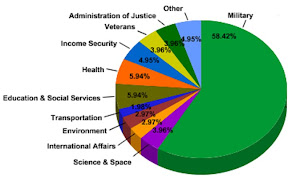
Pete Olson came down our street a few minutes ago. He is canvasing to get elected in Nick Lampson's district. I took the opportunity to stand out in the sun with him and talk about space in the Congress.
I told him how important the space program is to me, and how the Congress and the President really set the pace for the America's space program.
He agreed, and said that it was the president mostly who set the pace. He said that McCain want looking to promising on space, but that he looked better than Obama. I told him that I felt that space was primarily important for the inspirational value that it provides to Americans, and that's why I had chosen to work in the space industry myself. I told him that if we put a man on Mars and he didn't do any science there, it would still be worth it.
He shared some experiences with me about what set him on his path to become a Navy aviator, and that it was in part to open up the opportunity to be an astronaut. I'm not sure if he shares this with to many potential constituents.
I asked him that in the case that he was elected, he should promote and fund space exploration initiatives that would promote inspiration for Americans, and not just science.
As we were parting, he asked me if I thought that we could or should keep the shuttle flying past 2010. I was glad that he asked, and thought that he really wanted to know what I thought. I told him that I didn't think that it was a good idea and that I thought it was more important to move the CEV closer than to push the shuttle out. I shared with him an experience I'm having on the Space Station program where we are having to buy more parts than we originally intended and we are having to pay through the nose to get the contractor spun up again to build these parts.
I said that just like Cortez burned his ships when he landed in America, we should burn our ships that would keep us in LEO so that we could reach for the Moon and Mars.
He said that with enough funding the shuttle could be kept going, and I shared my dissatisfaction with the level of funding the George Bush has asked Congress to give to NASA. Bush's funding is less that what he laid out for NASA when he pitched the VSE to the nation.
My personal exposure to Pete Olson was positive, although brief.
Now that Congressional campaign season is up, take this opportunity to find out who is running in your area and talk to them about how and why you think that they should fund space. Talk to them while they are in a listening mode and trying to get your vote.
Saturday, August 2, 2008
My Conversation with Pete Olson


Thursday, April 24, 2008
Congressional Hearing on ISS Status and Issues
 The following is a rough transcript for the question segment of the House Committee hearing on Science and Technology for the ISS: Status and Issues:
Udall Q: How much will the taxpayers have paid for the station total?
Gerstenmaier: Be more specific. There are many costs that are indirectly related. Lets get back to that when you have the specifics
Udall: The station lives off consumables brought up by the shuttle. How important are these?
Gerstenmaier: we have 2 contingency flights that are ready to bring up spares in the manifest. This gives us breathing room if the commercial launch supply can’t deliver as soon as we would like. "Wwe just activated a lot of our systems on the outside of the space station" and they consume supplies.
Udall: You speak to the risk that we would incur if we didn’t fly those two contingency shuttle flights.
Gerstenmaier: We have seen some components perform much better than we had expected, and others that have not performed as well. The solar array rotator units and the CMG (control momnet gyros) have not performed as well, and that’s why we have the contingency flights.
Udall: Are those part of the manifest?
Gerstenmaier: They are part of the manifest, but they haven’t been approved or funded yet
Udall: Any backup plan if those flights cant be flown?
Gerstenmaier: If they don't fly, we will asses the risk of not having those spares.
Chaplin: If the spares to get pushed off until the COTS vehicles become available, the COTS vehicles might not be able to bring up the large spares. Or they might not be able to fit the spares planned for the contingency with the other parts that they need to bring.
Hall: You mentioned the risks if they cant fly. What if we do fly? With NASA's reliance on Soyuz, could you provide us with details about the reentry problem? What actions are being taken by the Russians to ensure safety?
Gerstenmaier: Both flights had a ballistic reentry. It spun like a bullet rather than flying with a controlled trajectory. Both vehicles had a failure of the service module to separate from the service module. The lower section did not properly release. The Russians saw that for the first vehicle and showed us conclusively that that is what happened because there was telemetry coming across a cable that should have been severed. It has not yet been proven conclusively what happened with this most recent vehicle. The fact that this problem has happened with two vehicles means that there is probably a design problem or a manufacturing change and we are going to look at that.
Hall: You may have to answer this in writing. In order for NASA to continue buying Soyuz, congress has to approve an exception to the
Gerstenmaier: We really need that now. It takes 3 years to get the vehicle built. We need to get that approval this summer. We need a
Hall: Or we might have to abandon the ISS if congress doesn’t approve it and we don’t want that. It has a bad effect on the international partners.
Lampson: I may sound like a broken record about the Alpha Magnetic Spectometer. There is a lot of hope that that can be sent up. I hope that the contingency flights do get funded. Is there a possibility that the AMS can go up the shuttle before the shuttle program ends. What other hardware has been developed that isn’t scheduled for flight? is NASA going to launch it?
Gerstenmaier: In terms of the AMS we don’t see a spot in the current shuttle management. If I took those spares off of the spares for AMS, then I wouldn’t have the spares that would be needed. The contingency flights could not be used for the AMS because the space is needed to run the AMS itself.
Other hardware was cancelled before it was ready to be flown, including the
Gerstenmaier: I'll look and see if there is any other hardware that is ready to fly but isn’t on the manifest and get back to you.
Lampson: Is it worth congresses money to complete this other hardware (
Gerstenmaier: I'm an engineer who builds the stuff, I don’t have the best answer for that.
Lampson: If we hadn’t shut down the X-33 we might not have needed to rely on the Soyuz. We canceled it at the end of the X-33 and it cost more to shut down the project than it would have taken to complete it.
It is critical for our reputation to the world that if we want to work with with other countries on science related projects we need to do what we say that we are going to do. "I hope and pray that we don’t loose our position to other nations in this space race"
Rorabacher: Can you tell us about the willingness of the Russians and their likylyhood to expand our cooperation to make up for the loss of the shuttle?
Gerstenmaier: We have really come to work together through this project. When the
Rohrabacher: are they capable for delivering spares to keep the us segment operating?
Gerstenmaier: they can not provide our spares. We will have commercial re-supply give our supplies. The European ATV can also bring up US supplies. The Japanese have a test propulsion article and it might be able to provide spares for us.
Rohrabacher: But what do we have that is online or that hasn’t only flown once?
Gerstenmaier: The thing thats online is the European ATV.
Rohrabacher: so the ATV will provide us the capability that can provide the spares ability that we need.
Gerstenmaier: we will need a combination of vehicles.
Rohrabacher: We have been short sighted. It was hard to project that we could have lost the shuttles. Congress and this committee have been unwilling to prioritize. Its not that there has not been enough money to spend, but we haven’t been able to say "no" to things that have taken money away from completing the international space station. We heard about today that microscopic imaging and storage would help us utilize this great asses in a way that would let us achieve more. Is there any thought as to what it would cost to provide that to the station?
Gerstenmaier we have a -80 degrees freezer that can provide cold storage and some small centrifuges. We need to talk with the scientific community and make sure that we have what is available to the scientific community.
Rohrabacher: There is great value to be achieved with what we have constructed. If we can achieve billions of dollars of return for only a couple of million dollars of equipment. Maybe the private sector would be willing to pay the millions to get the billions of return. We should be thinking creatively and out of the box about how we can work with the Russians about how to think that way. Udall and I will be traveling to
Udall: we are running out of time for this hearing. NASA’s agreement is that the station operate until 2016. What would it take to get that extended?
Gerstenmaier: COTS or Orion could keep us going. We need some small studies that are done with the Russians for the life of the station and we have contracts and agreements with the Russians to continue the sustaining engineering work
Udall: But the Russians won’t provide escape ability once the Orion is operational or when a crewed COTS return comes online. When do you see the Orion becoming totally operational
Gerstenmaier: 2016 is when it will be totally online. I know that’s at the end of the station life. Regarding COTS, it would be best to ask the commercial sector when they think that they will be ready.
Udall: what do the COTS companies need to do to be ready?
Gerstenmaier: the recent Soyuz incidents show what a hard thing it is to dock for 6 months and come down and land. COTS will have many engineering milestones to achieve.
Udall: How important is it that NASA can purchase any tools that they need from
Gerstenmaier: the pump in the quest airlock is Russian provided and it must be provided by
Udall: lots of suppliers work with Russians
Gerstenmaier: some of the cots bidders use Russian components and engines so they will need congressional authorization if the COTS participant that uses Russian components is selected
Udall: You talk about the Soyuz landing 400K away from their landing zone. If that happened in
Gerstenmaier "There’s is a lot of land that is open... Its not nearly as pretty as
Udall: the astronauts opened the hatch say the fire, and closed the hatch. The parachute caught fire and was consumed in the brush fire. The Kazak farmers got there by the the that they opened that hatch.
Hall: I wanted to thank this group. I want to recognize that Gerstenmaier is the best program manager that NASA has ever had. Thank you.
Udall: This is very important testimony. The record will remain open for further questions from the panel. This hearing is now adjourned.
Tuesday, April 15, 2008
Nick Lampson and Pete Olson Battle for Texas House Seat
 Nick Lampson, Texas democrat for Congress is running hard for his seat in congress and is making promises about promoting human spaceflight in the meantime. The seat is Texas’ 22nd District, vacated by space supporter Tom DeLay, and includes the Johnson Space Center.
The Orlando Sentinel reports "he has become NASA's biggest booster among House Democrats and might be able to use his campaign as leverage to persuade party leaders to support manned spaceflight... Eventually, Lampson wants to boost NASA funding to $30 billion."
Action for Space posted earlier that Lampson led a congressional delegation to a shuttle launch on March 11th.
Lampson is running against Pete Olson, a former political aid and navy pilot. Olson pledges to support the JSC and criticizes Olson for voting for HR 20, which decreased NASA funding.
Contact Lampson and Olson and tell them that they need to demonstrate a sincere earnestness to promote the space program.
Pete Olson for Congress
13515 Southwest Freeway Suite #207
Sugar Land, TX 77478
Campaign Phone: 281.342.PETE (7383)
Fax # 281.34237384
Email Pete: Pete@Olsonforcongress.com
Nick Lampson
in Washington DC:
436 Cannon HOB
Washington DC 20515
Phone: 202.225.5951
Fax: 202.225.5241
in Houston:
1020 Bay Area Blvd, Ste. 224
Houston TX 77058
Phone: 281.461.6300
Fax: 281.461.6303
Email Nick