Tuesday, April 29, 2008

House Members Urge House Leaders to Grant $2B to NASA

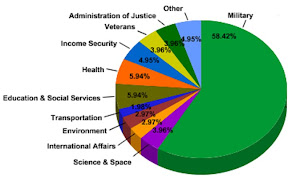
NASAWatch reports that a few dozen house members have sent a letter to the house leadership requesting 2 Billion additional funding for NASA to offset costs associated with bringing the Orion online, cleaning up after Katrina, and bringing the shuttle back to flight after the loss of Columbia. Read the text of the legislation and hit up these leaders with your agreement of the letter.

From the letter:

"Making much-needed investments in space and aeronautics research and development will also have a long-term and beneficial economic impact, contributing new jobs, industrial development and stimulus to struggling communities."

The letter was sent to the following leaders:

Nancy Pelosi (California)
Steny Hoyer (Maryland)
David Obey (Wisconsin)
John Boehner (Ohio)
Roy Blunt (Missouri)
Jerry Lewis (California)

Monday, April 28, 2008

SEDS Job/Internship Opportunity

A friend of mine, Jim Volp, made me aware of the following opportunities for the most die hard space activists out there. Read his note:

Original text is btw online at:
http://www.space-careers.com/jobsearch/view_4160.html


----------------
Summary:

The organization Students for the Exploration and Development of Space (SEDS) is seeking interns to work on a variety of interesting topics. You will be based close to Madrid, Spain. If you are interested to help out from your home via the Internet, that is possible and appreciated too! Contact: jim.volp@seds.org.

---------------
Job Description
---------------
Concepts such as commercial space liners, space hotels, space launch systems and lunar missions were thought to be empty promises....

But now in the post-X PRIZE world we are looking at:
- The first commercial space liner starting service in 2010
- The first successful test of commercial space hotel modules
- A space vehicle developed in a fraction of time or cost as before
- And more than 6 teams competing to land a private rover on the Moon.

We truly live in the interesting times of space exploration! And this is why SEDS and it's members are full of energy!

SEDS wants to interconnect students, all over the globe, in order to share and advocate their passion for space.

SEDS is looking for a small number of motivated people that want to work on the challenge to expand the existing network of SEDS chapters and move towards an active global student network as with the collective volunteer time of a (large) group of students global problems/projects can be worked on.

During the internship you will be working on a variety of disciplines: research, strategic business/organization development, marketing & PR.

Apart from the SEDS development work you have the choice to work on / support:
- International Astronautical Federation's Administrative Committee on Workforce Development / Young Professionals Programme
- IAF Administrative Committee on Space and Society
- World Space Week Educational Relations
- Space in Africa
- Space Generation Advisory Council in support of the United Nations Programme on Space Applications


International Astronautical Federation's Administrative Committee on Workforce Development / Young Professionals Program
- - - - - - - - - - - - - - - - - - - - - - - - - - - - - - - -
The committee's mandate is well described at: http://www.iafastro.org/index.php?id=842


IAF Administrative Committee on Space and Society
- - - - - - - - - - - - - - - - - - - - - - - - -
The committee has as aim to increase the visibility and direct benefit of space activities to society as a whole, through the active involvement of the IAF member societies and increase the visibility and number of IAF member societies through its involvement in our activities. Specific emphasis should be placed on those parts of society and the world where space and its benefits are less well-known.


World Space Week Global Education Program
- - - - - - - - - - - - - - - - - - - - - - -
"To celebrate each year at the international level the contributions of space science and technology to the betterment of the human condition" -- as declared by the United Nations General Assembly

The aim is to establish contact with more schools throughout the world each year and motivate them to celebrate space during World Space Week.


Africa and Space
- - - - - - - - - - - - - - - -
Information about space activities in Africa is hard to find. The aim is to create a useful and comprehensive overview.


Space Generation Advisory Council in support of the United Nations Program on Space Applications
- - - - - - - - - - - - - - - - - - - - - - - - - - - -
SGAC and SEDS are closely related organisations so the work to develop SEDS is also of relevance to SGAC. SGAC has observer status to the UN Committee on Peaceful Uses of Outer Space.


----------
Conditions
----------
Salary: The internship is not paid for. Accommodation is provided.
Deadline: Continuous opportunity, so no deadline
Duration: Flexible, minimal 1 month


The successful candidate shall
- be between 18 and 35 years old;
- possess good communications skills in English;
- have awsome understanding of (volunteer) organizations;
- have no VISA issues to enter Spain;


Other skills desirable
1. Ability to work under your own initiative
2. Interest in marketing & PR, networking
3. Working as part of an international team

If you are interested, you should send a brief email stating your interest and include a CV or other proof of skills.


-------------------------
Basic Information on SEDS
-------------------------
SEDS is an independent, student-based organization which promotes the exploration and development of space. SEDS pursues this mission by educating people about the benefits of space, by supporting a network of interested students, by providing an opportunity for members to develop their leadership skills, and inspiring people through our involvement in space-related projects. SEDS believes in a space-faring civilization and that focusing the enthusiasm of young people is the key to our future in space.


Links

http://www.seds.org
http://www.iafastro.org/index.php?id=842
http://www.iafastro.org/index.php?id=617
http://www.worldspaceweek.org/education.html
http://www.spacegeneration.org

Feeney's Florida House Seat Contest

Space Politics updates us on the race for Florida's 24th District seat in the house of Representatives. Up for bat is Democrat Suzanne Kosmas and Republican incumbent Tom Feeney.

Democrats point to Feeney's links to corrupt lobbyist Jack Abramoff.

"Feeney was among seven people who joined Abramoff on the $160,000 junket. Feeney reimbursed the government $5,643 for the trip, but the Justice Department last year asked Feeney for more information on his travel. Feeney calls the trip an embarrassing mistake." writes Brendan Farrington of the Associated Press.

Kosmas, a realtor, does not mention her stances on the issues at her website, and is notably silent about space exploration, notwithstanding an image of the shuttle at the main page.

Tom Feeney, on the other hand, states "My top priorities are to promote America's Vision for Space Exploration and to sustain the vitality of all NASA centers including the Kennedy Space Center." He visits China for the Global Space Development Summit this month.

Saturday, April 26, 2008

CNN Headlines Candidates Weak Space Stance

CNN headlines the story: "Raw Politics: Candidates and the space race" about how Obama, Clinton, and McCain all have a soft stance on manned exploration. Tom Foreman, the writer for the story, emphasizes China's growing space prowess and writes "if space does not become a higher priority, the Chinese program will be on par with America's by the end of the next president's second term. Then, it will be a real race to Mars even if we want to join in."


Its good to see the issue getting some attention in the election, even if it isn't from the candidates. NASAWatch links to a video on the story.
Could CNN be trying to put it on the agenda after neglecting it in a series of debates earlier?
Tell the candidates about the story. Tell them it makes them look bad. Invite them to differentiate themselves.

NASA Spinoff Magaxine

I got my free copy of Spinoff Magazine in the mail today in a big orange envelope with the NASA logo on it. I told my wife it was my astronaut recruitment letter. She didn't believe me, but was interested as I pulled out the shiny thick glossy book/magazine that detailed the highlights of the spinoff related activities, products, and services that NASA has engaged in for 2007. About two weeks ago I requested it from NASA's Website.


Some of the more interesting items in my view include:
This list is my highlights list of NASA's highlights list for 2007. It shouldn't be too long before you see some of this in your sky mall catalog.

In any case, Tang, satellites, Velcro, and cordless tools don't impress people anymore. Get your copy of Spinoff today and really have something to say the next time someone says "Why would we spend all that money in space when we have problems here on earth?" You tell them why.

Friday, April 25, 2008

Clinton Introduces Bill to Fund Aricebo Telescope

In a move some call driven to gain votes in the Puerto Rican democratic primaries, Hillary Clinton introduced a bill to provide funding to the Arecibo Observatory, similar to a stalled bill released in the house last year.

The Arecibo budget is 12.5 million a year. The NSF, the other major federal science agency, is squeezed for cash as well as NASA. They have announced that they are planning on cutting funding for the telescope in 2010.

Read Hillary's Press release and the text of the bill.

Then Email, Fax, Call, and Visit your Representative and Senator and tell them to vote in support of Senate Resolution 2862 or House Resolution 3737.

Thursday, April 24, 2008

Popular Mechanics Analyzes the Candidates

Popular Mechanics systematically exposes that all 3 presidential candidates are soft on space. McCain will freeze the budget, Hillary focuses on a ensuring expensive government capability to do what COTS is trying to do, and Obama is stately against expensive and dangerous human spaceflight.

It makes me sick to my stomach to see these politicians cover their bases with vague statements and ignoring the science debate. Give them your 2 cents. Tell them it makes you sick as well.

Promote Science Debate 2008 and
Email, Fax, and call Obama at (866) 675-2008,
Email, Fax, and call Clinton at (703) 469-2008, and
Email, Fax, and call McCain at (703) 418-2800.

Carnival Of Space 51

Ian O’Neill, a contributing writer to Universe Today, hosts the most recent Carnival of Space at his blog: "Astroengine." Check it out!

Congressional Hearing on ISS Status and Issues

The following is a rough transcript for the question segment of the House Committee hearing on Science and Technology for the ISS: Status and Issues:

Udall Q: How much will the taxpayers have paid for the station total?
Gerstenmaier: Be more specific. There are many costs that are indirectly related. Lets get back to that when you have the specifics

Udall: The station lives off consumables brought up by the shuttle. How important are these?
Gerstenmaier: we have 2 contingency flights that are ready to bring up spares in the manifest. This gives us breathing room if the commercial launch supply can’t deliver as soon as we would like. "Wwe just activated a lot of our systems on the outside of the space station" and they consume supplies.

Udall: You speak to the risk that we would incur if we didn’t fly those two contingency shuttle flights.
Gerstenmaier: We have seen some components perform much better than we had expected, and others that have not performed as well. The solar array rotator units and the CMG (control momnet gyros) have not performed as well, and that’s why we have the contingency flights.

Udall: Are those part of the manifest?
Gerstenmaier: They are part of the manifest, but they haven’t been approved or funded yet

Udall: Any backup plan if those flights cant be flown?
Gerstenmaier: If they don't fly, we will asses the risk of not having those spares.

Chaplin: If the spares to get pushed off until the COTS vehicles become available, the COTS vehicles might not be able to bring up the large spares. Or they might not be able to fit the spares planned for the contingency with the other parts that they need to bring.

Hall: You mentioned the risks if they cant fly. What if we do fly? With NASA's reliance on Soyuz, could you provide us with details about the reentry problem? What actions are being taken by the Russians to ensure safety?

Gerstenmaier: Both flights had a ballistic reentry. It spun like a bullet rather than flying with a controlled trajectory. Both vehicles had a failure of the service module to separate from the service module. The lower section did not properly release. The Russians saw that for the first vehicle and showed us conclusively that that is what happened because there was telemetry coming across a cable that should have been severed. It has not yet been proven conclusively what happened with this most recent vehicle. The fact that this problem has happened with two vehicles means that there is probably a design problem or a manufacturing change and we are going to look at that.

Hall: You may have to answer this in writing. In order for NASA to continue buying Soyuz, congress has to approve an exception to the Iran non-proliferation act. What would be the consequences if Congress did not pass that exception this year but it didn’t happen until next year.

Gerstenmaier: We really need that now. It takes 3 years to get the vehicle built. We need to get that approval this summer. We need a US presence to operate the US segment and we need the Soyuz to get us there. The only way to get them there initially is with the Soyuz. It is mandatory that congress approve the exception the Iran non-proliferation act.

Hall: Or we might have to abandon the ISS if congress doesn’t approve it and we don’t want that. It has a bad effect on the international partners.

Lampson: I may sound like a broken record about the Alpha Magnetic Spectometer. There is a lot of hope that that can be sent up. I hope that the contingency flights do get funded. Is there a possibility that the AMS can go up the shuttle before the shuttle program ends. What other hardware has been developed that isn’t scheduled for flight? is NASA going to launch it?

Gerstenmaier: In terms of the AMS we don’t see a spot in the current shuttle management. If I took those spares off of the spares for AMS, then I wouldn’t have the spares that would be needed. The contingency flights could not be used for the AMS because the space is needed to run the AMS itself.

Other hardware was cancelled before it was ready to be flown, including the CAM. However, the Cuppola will still go up. Combustion research will still go up. Our goal is to outfit station with the best racks that we can and we are still on track.

Gerstenmaier: I'll look and see if there is any other hardware that is ready to fly but isn’t on the manifest and get back to you.

Lampson: Is it worth congresses money to complete this other hardware (CAM) to fly it and launch?

Gerstenmaier: I'm an engineer who builds the stuff, I don’t have the best answer for that.

Lampson: If we hadn’t shut down the X-33 we might not have needed to rely on the Soyuz. We canceled it at the end of the X-33 and it cost more to shut down the project than it would have taken to complete it.

It is critical for our reputation to the world that if we want to work with with other countries on science related projects we need to do what we say that we are going to do. "I hope and pray that we don’t loose our position to other nations in this space race"

Rorabacher: Can you tell us about the willingness of the Russians and their likylyhood to expand our cooperation to make up for the loss of the shuttle?

Gerstenmaier: We have really come to work together through this project. When the Columbia was lost the Russians rose to that challenge and provided the Soyuz. If it weren’t for the Russians and their support, we would not have a space station. They need us as much as we need them. We give them power. They recognize that they can not run the station without us, but they will want compensation to provide the flights.

Rohrabacher: are they capable for delivering spares to keep the us segment operating?

Gerstenmaier: they can not provide our spares. We will have commercial re-supply give our supplies. The European ATV can also bring up US supplies. The Japanese have a test propulsion article and it might be able to provide spares for us.

Rohrabacher: But what do we have that is online or that hasn’t only flown once?


Gerstenmaier: The thing thats online is the European ATV.

Rohrabacher: so the ATV will provide us the capability that can provide the spares ability that we need.

Gerstenmaier: we will need a combination of vehicles.

Rohrabacher: We have been short sighted. It was hard to project that we could have lost the shuttles. Congress and this committee have been unwilling to prioritize. Its not that there has not been enough money to spend, but we haven’t been able to say "no" to things that have taken money away from completing the international space station. We heard about today that microscopic imaging and storage would help us utilize this great asses in a way that would let us achieve more. Is there any thought as to what it would cost to provide that to the station?

Gerstenmaier we have a -80 degrees freezer that can provide cold storage and some small centrifuges. We need to talk with the scientific community and make sure that we have what is available to the scientific community.

Rohrabacher: There is great value to be achieved with what we have constructed. If we can achieve billions of dollars of return for only a couple of million dollars of equipment. Maybe the private sector would be willing to pay the millions to get the billions of return. We should be thinking creatively and out of the box about how we can work with the Russians about how to think that way. Udall and I will be traveling to Russia to talk about this. Any advice that NASA has about this for how we can talk to the Russians would be appreciated.

Udall: we are running out of time for this hearing. NASA’s agreement is that the station operate until 2016. What would it take to get that extended?

Gerstenmaier: COTS or Orion could keep us going. We need some small studies that are done with the Russians for the life of the station and we have contracts and agreements with the Russians to continue the sustaining engineering work

Udall: But the Russians won’t provide escape ability once the Orion is operational or when a crewed COTS return comes online. When do you see the Orion becoming totally operational

Gerstenmaier: 2016 is when it will be totally online. I know that’s at the end of the station life. Regarding COTS, it would be best to ask the commercial sector when they think that they will be ready.

Udall: what do the COTS companies need to do to be ready?
Gerstenmaier: the recent Soyuz incidents show what a hard thing it is to dock for 6 months and come down and land. COTS will have many engineering milestones to achieve.

Udall: How important is it that NASA can purchase any tools that they need from Russia? Will the ISS be endangered if we don’t allow NASA to buy these things from Russia?

Gerstenmaier: the pump in the quest airlock is Russian provided and it must be provided by Russia. There are many other components that are small and must be provided for the life of the station

Udall: lots of suppliers work with Russians
Gerstenmaier: some of the cots bidders use Russian components and engines so they will need congressional authorization if the COTS participant that uses Russian components is selected

Udall: You talk about the Soyuz landing 400K away from their landing zone. If that happened in Colorado, they would land in mountain peaks. In Russians area they don’t have that. Could you elaborate?

Gerstenmaier "There’s is a lot of land that is open... Its not nearly as pretty as Colorado. They landed near some farmers who had started a brush fire before they had landed.

Udall: the astronauts opened the hatch say the fire, and closed the hatch. The parachute caught fire and was consumed in the brush fire. The Kazak farmers got there by the the that they opened that hatch.

Hall: I wanted to thank this group. I want to recognize that Gerstenmaier is the best program manager that NASA has ever had. Thank you.

Udall: This is very important testimony. The record will remain open for further questions from the panel. This hearing is now adjourned.

Wednesday, April 23, 2008

Smithsonian Space Day

The Smithsonian’s National Air and Space Museum is hosting a "Space Day" event on May 3rd. Residents around Virgina, head over to enjoy the many special events happening including:

Expedition 17 Flight Engineer Garrett Reisman
Acappella group "The Chromatics"
NASA and National Air and Space Museum scientists
live contact via amateur radio with the International Space Station

Booths include:

NASA
the Northern Virginia Association of Rocketry
Team America Rocketry
AMSAT-Radio Amateur Satellite Corporation
Washington Metro Area Users Group.

This is a great opportunity to bring you family and friends to get them more excited about our space program. Doors are open from 10 AM to 5:30 PM. Map

Tuesday, April 22, 2008

Sierra County Approves Spaceport Tax

3,000 of Sierra County's 14,000 residents turned out today to vote for a sales tax increase of .25% to help pay for Spaceport America. The supporters of the spaceport won by a 2:1 margin.

While this tax will only generate a few million dollars, it enables the government to spend well over a hundred million dollars in the newly created "tax district" on developing Spaceport America.

Celebrate this positive event as the first major commercial spaceport in America (with baker Virgin Galactic) picks up steam (and payloads).

SpaceX Wins NASA Launch Contract

SpaceX of California has won a contract that could be valued up to $1 Billion to support Science, Space Operations and Exploration Systems mission launches; so it pretty much covers anything. It's open season on some of the more expensive launchers now that SpaceX can compete on launching spacecraft "weighing 551 pounds or heavier into a circular orbit of 124 miles at an orbital inclination of 28.5 degrees."

The cost of access to space is the most critical enabler of a flourishing space industry. Elon Musk, CEO of SpaceX, began a rocket company because he initially wanted to send an experiment to Mars but realized the cost of launching there would be extremely expensive. He started SpaceX to solve that problem.

Monday, April 21, 2008

SPACEHAB and Florida Government Announce Biotech Partnership

SPACEHAB has announced a partnership with the government of Florida to ramp up efforts to perform biomedical research on the space station and using a space biomedical designated lab on the ground to perform new research. "Florida has provided SPACEHAB with both financial backing and valuable research facilities," said Thomas Pickens, SPACEHAB's CEO.


Florida, Virginia, New Mexico, California, and Texas are all states making efforts to gain traction by attracting and fostering space industry companies to their borders. Talk to your state leaders about the positive impact that space companies have on a state's economy and tell them why they should bring space companies to your state.

House Subcommittee Evaluates ISS Status and Issues

Space Politics reminds us that the House Committee on Science and Technology is holding a hearing on the Status and Issues of the International Space Station. Watch it NASA TV. Members of industry, academia, and government will testify to congress regarding current issues of the Space Station.

Saturday, April 19, 2008

New Mexico Space Voters, Start Your Engines

Spaceports blog reminds us that Tuesday is polling day for New Mexican Voters. Up for vote is a .25% increase in sales tax to pay for the New Mexico's Spaceport America, whose prime customer Richard Branson's Virgin Galactic.

Call your uncle, grandmother, or friend in Sierra County, New Mexico and remind them to get out and vote in favor of the tax. Or just pull up the directory and start cold calling. (I'm joking... but if you did do that, it would be kind of cool.) Tell them that the return on that investment will by far justify the expense.

Read Jack Kennedy's coverage on the story here, here, and here.